 Deep Enrich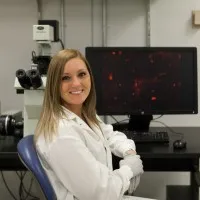
Bethany Mordhorst
Undergraduate Research Assistant
 284 followers
 Iowa City-Cedar Rapids Area
Connect with Bethany Mordhorst to Send Message
Connect
Connect with Bethany Mordhorst to Send Message
ConnectTimeline
About me
IVF Production Manager- ABS Global
Education

North Dakota State University
2012 - 2014Master's degree Animal Sciences 3.9/4.0Activities and Societies: Animal Science Student Government Organization Under direction of Dr. Kimberly Vonnahme.
Iowa State University
2008 - 2012Bachelor's degree Animal Sciences 3.6/4.0Activities and Societies: Student Government, Dairy Science Club Double major with Dairy Science.

University of Missouri-Columbia
2014 - 2017Doctor of Philosophy - PhD Animal Sciences 3.9/4.0Activities and Societies: Life Science Fellow, Animal Science Graduate Student Association, Alternative Career Exploration in the Sciences (ACES) Under direction of Dr. Randy Prather.
Experience
Iowa State University
Aug 2008 - May 2012Undergraduate Research Assistant
North Dakota State University
May 2012 - Jun 2014Graduate Research AssistantM.S. student in Animal Science Reproductive Physiology Under direction of Dr. Kimberly A. Vonnahme.Animal Science Department, North Dakota State University, Fargo, ND • Research Topic 1: Arginine supplementation during early pregnancy in dairy heifers and cows.• Aims: Assess whether daily arginine supplementation in early gestation would impact uterine and mammary artery hemodynamics and blood metabolic parameters.• Techniques: Surgery for peritoneal cavity catheters, Doppler ultrasonography of uterine and mammary blood flow, individual feeding/nutrition experiments (collecting and processing feed refusals), blood collection and analysis for progesterone.• Research Topic 2: Impact of protein and fat supplementation on uterine and mammary blood flow in late gestating beef cows.• Aims: Determine how nutrition augments blood flow to the mammary gland and fetus and how these changes impact development of calves and the cows' condition.• Techniques: Doppler ultrasonography of uterine and mammary blood flow, individual feeding/nutrition experiments (Insentec system), use of hydraulic chutes, collection and processing of blood and milk, analysis of progesterone content, assisting in parturition, and management of the herd, statistical analysis, linear and quadratic regression analysis.• Research Topic 3: Nutrient restriction and realimentation impacts on placentome vascularity in pregnant beef cows.• Aims: Determine how nutrition impacts placental vasculature and fetal development in the gestating beef cow.• Techniques: Immunohistochemistry; microscopy, use of imaging software for processing and analysis.Other:- Periovulatory bovine somatropin effects on placental development in ovine with Carolina Pereira and Dr. Kendall Swanson; helped weigh, feed, and inject sheep. - Protein supplementation effect on uterine and mammary blood flow in pregnant beef cattle with Victoria Kennedy and Dr. Caleb Lemley; did Doppler ultrasonography and liver biopsies. Show less

University of Missouri-Columbia
Jul 2014 - Aug 2017Graduate Research AssistantPh. D. student in Animal Science Reproductive Physiology Under direction of Dr. Randall S. PratherAnimal Science Department, University of Missouri, Columbia, MO• Research Topic 1: Programming of donor-cell fibroblasts towards a more “Warburg-like" metabolism similar to that of a blastomere for improvement of embryonic development in somatic cell nuclear transfer (SCNT) produced porcine.• Aims: Determine how cells can be metabolically programmed pharmacologically and with oxygen constraint through altering mitochondrial function with pharmaceutical agents. Use this knowledge to optimize donor-cells for use in SCNT embryos transferred to surrogate sows. • Techniques: Flow cytometry, light and electron microscopy, mammalian cell culture, RNA extraction, qPCR, gas chromatography mass spectrometry metabolomics, in vitro embryo culture, somatic cell nuclear transfer, and embryo transfer.• Research Topic 2: Determine what pathways are differentially regulated between donor-fibroblasts (for use in somatic cell nuclear transfer) when cultured in a high vs. low quality fetal bovine serum. Furthermore determine what genes may not be expressed similarly among Landrace-cross, Ossabaw, and Minnesota miniature swine breed fetal fibroblast cell-lines. • Techniques: RNA sequencing, bioinformatic and statistical processing.• Other project collaboration: Computational biology flux-balance analysis of substrate and enzyme regulations facilitating a Warburg-like metabolism within a pre-implantation embryo model with Miranda Wilson and Dr. Gavin Conant. Show less

Sanford Health
Sept 2017 - Dec 2018Postdoctoral ResearcherLaboratory of Dr. Peter F. VitielloSanford Health, Environmental Influences on Health & Disease Group- Pediatrics.• Research Topic 1: Determining the molecular functions of Thioredoxin 1.• Aims: Investigate how conditional loss of Thioredoxin 1 contributes to pathologies, in utero organogenesis, and postnatal lung epithelial development.• Techniques: Development and use of conditional mouse models, microscopy, RNA extraction, RNA sequencing, network pathway analysis, HPLC, protein extraction, redox proteomic labeling, and proteomic analysis.• Research Topic 2: Determine roles of Thioredoxin 2 in central metabolic regulation and homeostasis.• Aims: Investigate changes in metabolism and mitochondrial function using targeted shRNAs to knock down expression of Trx2 and Bio-ID proteomic identification of Trx2-interacting proteins. • Techniques: Designing and testing shRNAs to knock down expression, investigate metabolic changes via flux balance analyzers, metabolomics, mitochondrial complex assembly assays, Bio-ID pulldown, and proteomic analysis. • Research Topic 3: Develop a biotherapeutic for Friedreich's ataxia.• Aims: Engineer E.coli for expression of fusion proteins like Frataxin and Peroxiredoxin 3 which could be used as a biotherapeutic for Friedreich's ataxia. Eventual testing the ability of these refolded enzymes in patient-derived cell lines as well as in other cell lines with shRNA targeted knock down of Frataxin. • Techniques: E. coli culture, plasmid development, transfection, DNA extraction for sequencing and gels, restriction enzyme digests, isolation of protein via FPLC, protein folding, and protein concentration. Show less
Precigen Exemplar
Jan 2019 - Jul 2022Embryology Laboratory Manager
Integrated DNA Technologies
Jul 2022 - Aug 2023Staff Scientist Enzyme Development
ABS Global
Oct 2023 - nowIVF Production Manager
Licenses & Certifications

Six Sigma Black Belt Certification – Level I
Aveta Business InstituteNov 2020- View certificate
Working with Mice in Research
CITI Program, A Division of BRANYSept 2017
CPR & AED
Kirkwood Community CollegeNov 2020
Recommendations

Kingsley azah
Finance Manager for Sequest Consulting GmbH (Germany), Stoker Technologies S.R.L. (Romania), and Mig...Duisburg, North Rhine-Westphalia, Germany
Ribka rebekka marpaung
Degree in Geophysics EngineeringJakarta, Indonesia
Sam sharp
Sr. Cybersecurity Engineer at Vanderbilt University Medical CenterClarksville, Tennessee, United States
Michael caltagirone
Senior Application/Integration Developer/ArchitectLittleton, Colorado, United States
Oliver lilford
Research Officer, The Crawford School of Public Policy, The Australian National UniversityCanberra, Australian Capital Territory, Australia
Mel ross
Head of Department at Baradene CollegeAuckland, Auckland, New Zealand
Divyansh gupta
Litigation | Public Policy | Blogger | TEDx | THF ChandigarhChandigarh, Chandigarh, India
Colin moore
Tarmac supervisor contract managerRadstock, England, United Kingdom
Daniel souza
Technical Account Manager • MCT • MCPSão Paulo, São Paulo, Brazil
Anupam jha
Engineering Manager at EatonPune, Maharashtra, India
David sastre albella
UAV/UAS Specialist, Lead developer on Lince SystemsSierre, Valais, Switzerland
Chrissie green
Building Support Manager at Transport for LondonLondon, England, United Kingdom
Samppa marttinen
Event Manager at HJK HelsinkiHelsinki, Uusimaa, Finland
Jane hanrahan
Clerical Officer at Tusla - Child and Family AgencyIreland
Samuel šutka
Junior Software Developer (Java)Dvorníky, Trnava Region, Slovakia
Stephen clifford
Director and Co-Founder at New Way Business DevelopementGreater Brisbane Area
Jayesh arora
Lead Quality Assurance Engineer | Specializing in Test Procedure Development & Process Improvements ...Jodhpur, Rajasthan, India
Melinda thom
Sustainability Manager at Outspan PNG Ltd, Olam Food IngredientsLae, Morobe, Papua New Guinea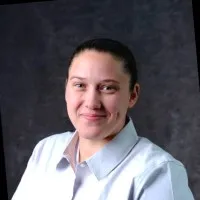
Kelsie mccanna
Experienced Chief Operating Officer & Chief Compliance OfficerChandler, Arizona, United States
Yuvaraj subramanian
JAVA DEVELOPER | PYTHON DEVELOPERTiruchirappalli, Tamil Nadu, India
...