 Deep Enrich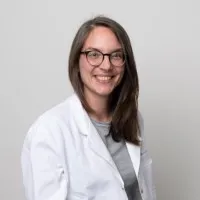
Maike Getwan
PhD student
 168 followers
 Zurich, Zurich, Switzerland
Connect with Maike Getwan to Send Message
Connect
Connect with Maike Getwan to Send Message
ConnectTimeline
About me
Scientist | Molecular Biology | Passion for Rare Diseasses | Passion for Model Organisms | Fascination for Food & Tastes
Education

University of Hohenheim
2009 - 2009Diploma Biology 1.1"The embryonic function of the secreted growth factor Coco during left right axis establishment of Xenopus laevis" Maily with microinjections and detection of mRNA expression was the interaction of the three key factors for left-right axis establishment shown (Coco, Nodal and a leftward directed fluid flow).
University of Hohenheim
2009 - 2015Dr. rer. nat. Biology 1.0"Analysis of flow mediated symmetry breakage in the frog Xenopus: the role of the Nodal antagonist Coco"The role of Coco (dand5), a very critical factor for left-right-axis development was analyzed with molecular methods (microinjections of morpholinos, in situ hybridization (detection of mRNA), cloning, RT-PCR,...). In more detail the regulation of its asymmetric expression by miRNAs was the central part of the PhD thesis. DOI: 10.1038/s41467-021-25464-zDOI:… Show more "Analysis of flow mediated symmetry breakage in the frog Xenopus: the role of the Nodal antagonist Coco"The role of Coco (dand5), a very critical factor for left-right-axis development was analyzed with molecular methods (microinjections of morpholinos, in situ hybridization (detection of mRNA), cloning, RT-PCR,...). In more detail the regulation of its asymmetric expression by miRNAs was the central part of the PhD thesis. DOI: 10.1038/s41467-021-25464-zDOI: 10.1016/j.cub.2010.02.061 Show less

Universität Hohenheim
2004 - 2015Dr. rer. nat. Biology/Biological Sciences, General
Experience

University of Hohenheim
Dec 2009 - Apr 2015PhD studentI was part of the Martin Blum group, which focused on left-right-axis development of amphibian and mammal embryos but also see urchins and chickens. my project:My PhD thesis concentrated on the establishment of left-right asymmetry during early development of Xenopus. my goal:To find out how the first asymmetrically expressed gene Dand5 (or: Coco) is regulated (transcriptionally, post-transcriptionally, translationally).most important methods:- analyse gene interactions with rescue-experiments and additive effect of RNA/DNA/morpholino oligonucleotides- miRNAs (injection (gain and loss of function), detection with in situ hybridisation)- working with Xenopus laevis (in vitro fertization, cultivation)- DNA- handling (DNA (PCR, cloning, cDNA synthesis/ RT-PCR, extraction, detection via gel electrophoresis, sequencing) - RNA-handling (total RNA extraction/ isolation, in situ hybridization, synthesis, injection into embryos)- detection/ staining of protein (whole embryos/ organs and sections; preparation of tissue (fixation); staining for multiple proteins at once; testing of new antibodies; DAPI; phalloidin)- morpholino oligonucleotides- phenotype analysis- confocal and stereo-microscopy- microinjection and micromanipulationfurther:- graphical programs (Adobe, ImageJ)- presentation of results (international conference, internally)- supervision of student courses as well as bachelor, master and doctoral students during their thesis' in the labpublications:DOI: 10.1038/s41467-021-25464-zDOI: 10.1016/j.cub.2010.02.061 Show less

Medical University of Freiburg
Oct 2015 - Sept 2019Scientist (postdoctoral researcher)Member of the Soeren Lienkamp group focusing on kidney research (nephrology, nephropathies)my project: A rare group of diseases called "Short Rib Thoracic Dysplasia" (SRTD) belonging to skeletal ciliopathies/ chondrodysplasia. They are linked to nephropathies and have their origin in mutations of cilia genes.my goal: identification and characterization of novel SRTD associated genes most important methods: - phenotype analysis of Xenopus laevis and Xenopus tropicalis crispants (embryos and adults)- microinjections- stainings and detections of mRNA and proteins (in situ hybridisation, immunhistochemistry)- microscopy (LSM, confocal)- cloning- CRISPR/Cas9further:- Statistical analysis (GraphPad Prism, ImageJ)- Graphical programs (Adobe, Affinity, ImageJ)- Write scientific manuscripts- Supervision of PhD students and medical studentspublication: DOI: 10.1073/pnas.2106770118 Show less

University of Zurich
Oct 2019 - Sept 2022Scientist (postdoctoral researcher)Continuation of the work on skeletal ciliopathy genes from Freiburg in the lab of Soeren Lienkamp in Zurichnew methods:- histology (Technovit, stainings)- microCT with froglets- Creating, breeding and analysis of transgene Xenopus CRISPR/Cas9-lines- Optimization, adapting and generating of genotyping methods for Xenopus CRISPR/Cas9 embryos and adults (DNA extraction with hundreds of embryos, genotyping)
Ariya Bio
Sept 2023 - Dec 2023ScientistAriya Bio developes next-generation gene therapies for inherited blood diseases with CRISPR/Cas9Techniques and goals:• Cellculture with non-adherent cell line HUDEP2 and hPSC in a BSL-2 environment• Knock-in with CRISPR/Cas9 (design of constructs, RNP nucleofection of cells)• Increasing knockin efficency of CRISPR/Cas9• Multiplexing with CRISPR/Cas9 (combination of kockout and knockin)• Gene editing efficency testing with NGS (Next Generation Sequencing) • HPLC• qPCR• Flow Cytometry Show less

Cytosurge AG
Jan 2024 - Aug 2024R&D Scientist BiologyCytosurge AG offers a particularly gentle way of manipulating cell lines: By injecting individual cells, they are edited at the gene level. Areas of responsibility: • Creating and optimizing methods and protocols/work instructions • Gene editing of cell lines (CRISPR/Cas9) • Optimization of CRISPR/Cas9 knockins • Cell culture with adheren cell lines (C2C12, C2C12 with GFP, HEK, HeLa, U2OS): • Maintenance of cell lines (trypsin treatment, keeping in culture, different types of cell number determination) • Cryopreservation (freezing and thawing of cell lines) • Single cell seeding • generate and maintain monoclonal cell lines • Optimizing the handling of cells for injections (e.g. plating) • PCR optimization for genotyping with NGS• Working with online laboratory journals • Presenting results to internal steakholders Show less
Licenses & Certifications

Course on Laborytory Animal Science (FELASA)
Universitätsklinikum FreiburgOct 2015
Embryology Course
Marine Biological LaboratoryJul 2015
Cell and Developmental Biology of Xenopus
Cold Spring Harbor LaboratoryApr 2011
5th MIAP BioImage Analysis Workshop
Albert-Ludwigs-Universität Freiburg im BreisgauNov 2017
Advanced Imaging Techniques in Microscopy
Universität FreiburgNov 2015
LTK Module EGA - Introductory Course in Laboratory Animal Science for experimenters
Universität Zürich | University of ZurichJun 2019Xenopus Genome Editing Workshop
Marine Biological LaboratoryMay 2016
Languages
- deDeutsch

- enEnglisch
- frFranzösisch

- spSpanisch
Recommendations
Daquan boyce
Follower of Christ, Husband, Father, WR Football Coach at JM Robinson High School #WeRTheStandardConcord, North Carolina, United States
Mduduzi ndlovu
Manager (Tax Technology Consulting) - IT Business AnalystCity of Johannesburg, Gauteng, South Africa
Cansu çalık
Sr. Software DeveloperTürkiye
Taylor a. coleman, phd
Africana & American Studies ScholarBuffalo, New York, United States
Rodolfo doretto
Gerente de Tecnologia | Gestão de Projetos | Metodologia ÁgilSão Paulo, São Paulo, Brazil
Mingfeng liu
commodity managerMinhang District, Shanghai, China
Darryl lovegrove
International Keynote Speaker | Author | Founder Lovegrove EntertainmentGreater Sydney Area
Austin langenfelder, cfi
Regional Investigation Manager at Lowe's Companies, Inc. / MAORCA Board MemberBaltimore City County, Maryland, United States
Алексей быков
Генеральный директор - ООО ЭТЭКОVitsyebsk, Vitsyebsk, Belarus
Samarjith hk
Technical Writer at TCSBengaluru, Karnataka, India
Michael beck, cfp®
Vice President, Wealth Management at St Mary’s Financial ServicesManchester, New Hampshire, United States
Jen hoyt
Director of Special Projects at Steppenwolf Theatre CompanyGreater Chicago Area
Aftab alam
Software Developer @ WTi cabs | MCA, Java/J2EENew Delhi, Delhi, India
Elie yammine
Construction Manager at DematicOffenbach, Hesse, Germany
Jaiprakash pathak
Workday Technical ConsultantMumbai, Maharashtra, India
Lunga makwakwa
Intermediate Software Developer at Astute - The Financial Services ExchangeCity of Johannesburg, Gauteng, South Africa
Dennis blok ffp dsi
Accountmanager Particulieren at HandelsbankenEpe, Gelderland, Netherlands
Wilfred odhiambo
Senior Product Executive | Driving Growth & Partnerships at RedingtonKenya
Amanda cooper
Vice President of Strategic Initiatives at Lakeshore AdvantageGrand Rapids Metropolitan Area
Haley surrette
RN at BoozmanHof Eye Surgery & Laser CenterGreater Fayetteville, AR Area
...