 Deep Enrich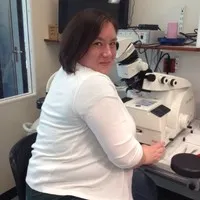
Nicole Selzer-Backus
Student Teaching Assistant
 130 followers
 Germany
Connect with Nicole Selzer-Backus to Send Message
Connect
Connect with Nicole Selzer-Backus to Send Message
ConnectTimeline
About me
Lehrerin für Chemie und Biologie an Gesamtschulen
Education
Philipps-Universität Marburg
-Diplom Biologie Zoologie/TierbiologieActivities and Societies: Administration of “Biomedia” web page Mollusca with ca. 130 000 species might be the most successful phylum. Species of the class gastropoda settled on land, fresh water and seawater. During my Diploma thesis project I focused on sea snail species of Trochidae and split my project in two parts. The first project concerned the working question, if concentrations of different chemical elements in the seawater do have influence on pattern, formation and coloration of sea snails. Therefore, I evaluated EDX and SEM analyses of pallium… Show more Mollusca with ca. 130 000 species might be the most successful phylum. Species of the class gastropoda settled on land, fresh water and seawater. During my Diploma thesis project I focused on sea snail species of Trochidae and split my project in two parts. The first project concerned the working question, if concentrations of different chemical elements in the seawater do have influence on pattern, formation and coloration of sea snails. Therefore, I evaluated EDX and SEM analyses of pallium and shell and TEM and LM images of pallium. Seawater tanks with different concentrations of different chemical elements were further established, in which sea snails were cultured to see a direct effect on the shell itself. Additionally, I was asking if phylogenetic analyses are still possible on morphological data, here the radula. I ranked different criteria of radula based on SEM images and calculated a putative phylogenetic tree. Show less

Università degli Studi del Sannio-Benevento
2009 - 2013Doctor of Philosophy - PhD Computational Biology
Experience
Philipps-Universität Marburg
Oct 2007 - Jan 2008Student Teaching AssistantSupervisor: Prof. J. SchachtnerDuties: mentoring students apprentice in working and on their own project, working with different computer software, e.g. Adobe Photoshop, GeneDoc

Justus Liebig Universität Gießen
Oct 2008 - Feb 2009Graduate Teaching AssistantSupervisor: Prof. S. KölleDuties: mentoring students apprentice in working with and dissecting vertebratesSupervisor: Prof. R. BrehmDuties: mentoring students apprentice in working with microscopes and analysing histological data
Stazione Zoologica A Dohrn
Apr 2009 - Jul 2013PhD StudentDuring my PhD project I took a comparative approach using invertebrate nervous systems for experimental study has provided great leaps forward in understanding. The physiology, anatomy, and mechanisms in invertebrates are often sufficiently different to give considerable experimental advantages.To understand how processes emerge from their morphological substrates is essential to relate structure to function. A major aim is to have all the connectivity information for a nervous system so that the function can be more precisely interpreted. So far this has only been achieved in part for simple invertebrate nervous systems such as C. elegans.I have focused on the ascidian Ciona intestinalis, an invertebrate chordate which is part of the same phylum as vertebrates but sufficiently simplified to offer the possibility of an analysis from anatomy to function.Mapping of all connectivity in the Ciona larval neural network is a feasible objective (connectome). This information by itself will not be enough to allow us to understand ultimately how anatomy relates to behavior. We need to in addition understand the physiology of the connections. Putting these two pieces of information together will help to explain the emergent behavior. In vertebrates this unity is confounded by massive complexity of the nervous system (based on billions of cells with trillions of connections) and the elaborate nature of the physiology.Massive crowd sourcing annotation of serial EM sections with the new scanning block face technology may eventually enable the anatomy of even complex nervous systems to be established. However, only in ascidians with their limited numbers of neurons (100s) and connections (1000s of synapses) and simple physiology is this goal imminently achievable.Therefore, as a first step in this direction, I have applied bioinformatics and anatomical studies to produce a connectome of part of the nervous system of the solitary tunicate Ciona intestinalis. Show less
The Sven Lovén Centre for Marine Sciences
Aug 2009 - Aug 2009Summer Research InternAnalysis of biotic effects on the fertility of Ciona intestinalis
Stazione Zoologica Anton Dohrn
Sept 2009 - Sept 2009Graduate Teaching Assistant1st Kemali-IBRO Mediterranean School of NeuroscienceSupervisor: Dr. E. R. BrownDuties: mentoring students in working with Fluorescence microscopy and dissection invertebrates
Observatoire Océanologique de Banyuls sur Mer (OBS)
Jul 2010 - Jul 2010Summer Research FellowGRAIL – Comparison between Branchiostoma lanceolatum and Ciona intestinalis larvae neuromuscular systems using EM and immunocytochemistry
Stazione Zoologica Anton Dohrn
Jul 2011 - Jul 2011Graduate Teaching Assistant2nd Kemali-IBRO Mediterranean School of NeuroscienceSupervisor: Dr. E. R. BrownDuties: mentoring students in planning and creating a project
Umeå University
Jan 2014 - Dec 2015PostDoc FellowMycobacterium tuberculosis is a rod shaped bacteria, which causes the human diseases tuberculosis. M. marinum M and Mycobacterium bovis BCG function as model organisms for Mycobacterium and their genomes were recently sequenced. Streptomyces coelicolor is a filamentous bacterium and is established as model organisms for polar growth. Both genera Mycobacterium and Streptomyces belong to the order Actinomycetales (phylum Actinobacteria) and I investigate their relationship on proteomic level, focusing on cytoskeletal like proteins involved in growth and polarity. The aim is to visualize the spatial localization of intermediate filament like proteins in M. bovis BCG and M. marinum M to give further answers on protein function, cell stability and the mechanism behind polarity establishment and maintenance among Actinobacteria. This would further demonstrate putative protein evolution. Show less
IAD GmbH
May 2017 - Jul 2017Projektmanagement Training and CertificationBezirksregierung Düsseldorf
Dec 2018 - nowLehrkraft für Naturwissenschaften
Licenses & Certifications

Prince 2 Foundation
APMG International
Languages
- deDeutsch
- enEnglisch
- itItalienisch
- frFranzösisch
Recommendations
Sayan pal
Manager- Epsilon Carbon Pvt. Ltd., Six Sigma Black belt, MBA from IU International University of Ap...Bellary, Karnataka, India
Mohamed ismail , dipifr
Supervisor Accountant ElsharbatlyCairo, Egypt
Zack spader
Key Account Manager, NY-Metro at SennheiserNew York City Metropolitan Area
Iryna morozova
CEO of LLC BRAVO TOOLSUkraine
Jahid ul-haque
Khan Brothers Knitwear Ind. Ltd.Bangladesh
Loren will
Human ResourcesGreater Colorado Springs Area
Harshpreet singh
Ex - Senior at EYDelhi, India
Alejandro lora velázquez
Software Engineer en GlobantMontevideo, Montevideo, Uruguay
Iain dickie
Counsellor at NHSCarlisle, England, United Kingdom
Tessa fij
Global Partnerships and Project Manager at BopincUtrecht, Utrecht, Netherlands
Koteswari chandramohan
Technical Architect | Salesforce | Vlocity Consultant | Vlocity VIP Member at IBMBengaluru, Karnataka, India
Zuzanna zawadzka
Product Assistant | Rainbow Tours 🌈 ☀️Łódź, Łódzkie, Poland
Billy eriksson
Product Engineering Manager at ABB Force MeasurementÖrebro, Örebro County, Sweden
Yasmine hamidi
LawyerMelbourne, Victoria, Australia
Nicolas houplon
Data Engineer | Safran Aéro CompositeNancy, Grand Est, France
Fabiana pires sciarotta
Visitor and Sales Manager at Royal Museums GreenwichLondon, England, United Kingdom
Capucine de villeplée
Sales Administrator - MellerioParis, Île-de-France, France
Bruno cristiano
Head of Chief & Lead EngineeringÉlancourt, Île-de-France, France
Cagdas baygin
Managing Director at Meet2Talk Cafe Besiktas branchIstanbul, Istanbul, Türkiye
Ricardo kubata
Analista de ImplantaçãoSão Paulo, São Paulo, Brazil
...