What Is Lead Routing?
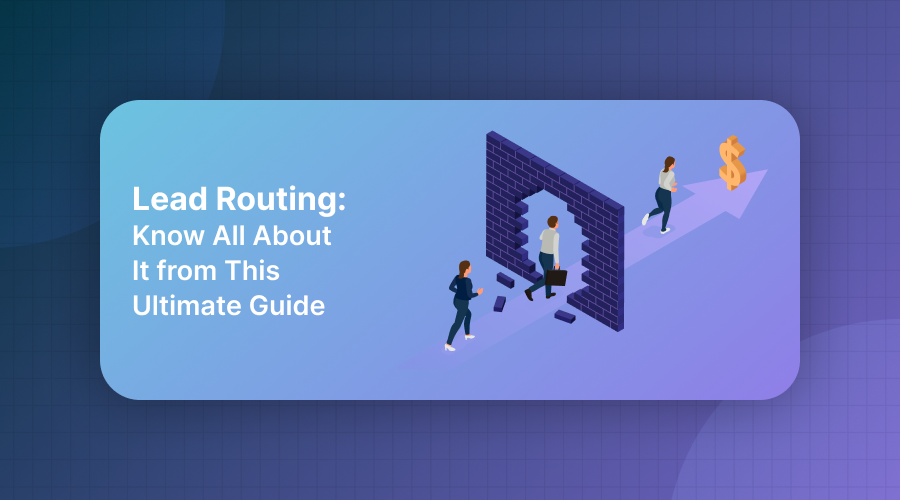
Lead routing is the process that automatically does the assignment of new potential customers (leads) to the most appropriate salesperson or team based on a set of rules and criteria, like the location, the interest in a product, or the lead score, to allow quick, efficient follow-up and better conversion rates.
Why Lead Routing Matters for Growing Businesses?
Faster response times
Better sales team efficiency
Instead of manually sorting through scattered leads, reps get a structured stream of qualified leads routed directly into their queue. This allows them to spend more time building relationships rather than performing administrative tasks, ultimately improving productivity and morale.
Reduced lost opportunities
Better specialization management
Territory overlap, duplicate outreach, and ownership confusion can frustrate both teams and customers. Lead routing ensures leads land in the right hands, maintaining fairness and eliminating internal conflicts.
How Lead Routing Works? Step-By-Step Breakdown
Step 1: Lead Capture
Step 2: Data Validation & Enrichment
Step 3: Apply Routing Rules
Step 4: Automated Distribution
Step 5: Escalation & Fallback
Step 6: Monitoring & Improvement
Routing is not a “set and forget” system. Regularly, businesses evaluate routing performance by looking into the response time, accuracy of lead assignment, conversion results, and rep capacity to improve rules continuously.
Common Lead Routing Rules
Geographic routing
Industry-based routing
If your business serves multiple industries, routing by sector ensures leads speak to reps familiar with their challenges. A rep specializing in SaaS clients will perform better than one who only handles manufacturing.
Product-interest routing
Different leads may inquire about different products. Routing ensures each lead is connected to the rep who knows that specific product line in depth.
Lead score routing
High-intent leads should go to senior reps for immediate follow-up. Lower-intent leads can be routed to SDR teams for nurturing. Lead scoring adds maturity to the routing engine.
Availability-based routing
If speed is a priority, the system assigns leads to the first available or least-loaded rep. This rule ensures immediate response in high-volume environments.
Round-robin routing
Ideal for fairness and workload balance, leads are evenly distributed across qualified reps.
Key account or ownership-based routing
If a lead belongs to an existing customer account, it should automatically route to the account owner to avoid confusion and maintain customer trust.
Best Practices for Implementing Lead Routing
These are some of the best practices useful for implementing lead routing in an organization:
1. Define your response-time goals first
2. Always enrich before routing
3. Build routing logic in layers
4. Set clear fallback rules
Leads shouldn’t sit unassigned or ignored. Always define what happens if a rep fails to respond, automatic reassignment, escalation to managers, or routing to a general queue.
5. Continuously analyze performance
- Are leads frequently reassigned?
- Are response times slow for certain products?
- Is the round-robin unfair due to rep absences?
6. Make routing transparent
Sales reps should understand why they received each lead. Transparency improves trust and promotes accountability.
KPIs to Measure the Success of Lead Routing
A powerful routing system can only improve with constant measurement. Track these KPIs:
Speed to Response
Measures how quickly a rep connects after a lead enters the system. Lower times equal higher conversions.
Lead Acceptance Time
Tracks how long reps take to acknowledge new leads routed to them. Helps identify process slowdowns.
Lead Engagement Rate
Shows how many routed leads receive actual outreach (calls, emails, meetings scheduled).
Lead-to-Opportunity Conversion
Indicates whether routing logic is aligning the right reps with the right leads.
Opportunity Win Rate
Measures closing success for routed leads, useful for evaluating rep specialization accuracy.
Fallback Trigger Frequency
High fallback rates indicate routing gaps or rep availability issues that need fixing.
How Deep Enrich Makes Lead Routing More Effective?
DeepEnrich automatically enhances lead routing to make it incredibly more effective by turning basic contact information into comprehensive, actionable profiles through automated data enrichment. The result of this enables the creation of smart, automated routing rules that ensure leads are sent to the most qualified sales representatives instantly, thus improving response times and conversion rates.
Comprehensive Data Collection: DeepEnrich queries 15+ data providers to fill in missing information like company size, industry, job title, technology stack, and geographic location. This gives the sales reps a 360-degree view of the prospect and removes time spent on manual research.
Intelligent Segmentation and Scoring: Enriched data shall enable businesses to precisely segment leads based on exhaustive criteria-including industry, company size, buying signals, among others-and apply a predictive lead-scoring model. The high-value leads matching the ICP shall be flagged and given priority.
Rule-Based and AI-Assisted Automation: In place of manual assignment, businesses can establish routing rules based on enriched data points. For instance, leads from the healthcare industry are routed to the representatives specializing in that vertical. Moreover, the platform will support AI-assisted routing, learning from past performance to dynamically assign leads to the representative who has the highest probability of closing the deal.
Real-time Processing: The enrichment and routing occur in real time, at the very moment a lead submits a form or enters the system. This is absolutely key to ensuring maximum “speed to lead,” as prompt follow-up-ideally, within five minutes-significantly improves qualification and conversion chances.
Integration with Workflows: It offers seamless integration with existing workflows, over 1000+ apps, and mainstream CRMs such as Salesforce and HubSpot. Integration with these apps will guarantee that the enriched data is updated, and the routing action across all platforms will maintain data hygiene and give a holistic view of the customer journey.
Summing Up
To Know More About Lead Generation Checkout These Guides: